


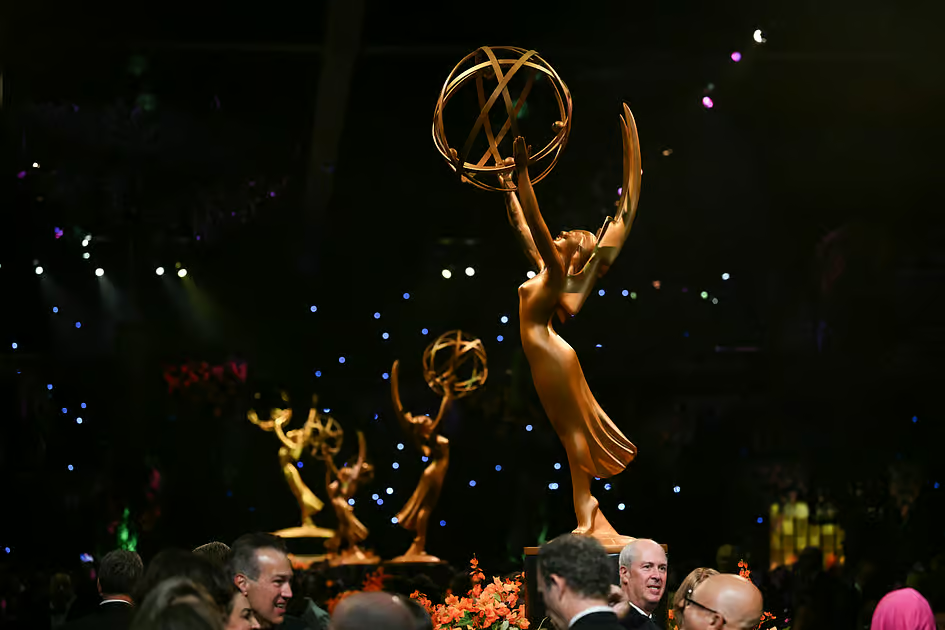
For several years, Hollywood awards bodies have faced sustained scrutiny over who is recognised — and who is overlooked — when trophies are handed out. From #OscarsSoWhite to repeated conversations around representation at the Emmys, critics have argued that diverse casts and stories have not always been matched by equally diverse nomination lists or winners’ circles.
That debate has returned to the spotlight following the 2026 Primetime Emmy Awards, where no actor of colour won across any of the 12 lead and supporting acting categories. It marked the first time in five years that the major performance awards went entirely to white actors, prompting the hashtag #EmmysSoWhite to make a comeback on social media.
The sweep spanned across drama, comedy and limited or anthology series. Noah Wyle and Rhea Seehorn won the lead drama prizes for The Pitt and Pluribus, while Matthew Rhys and Jean Smart took the top comedy acting awards for Widow’s Bay and Hacks. Rhys also won for The Beast in Me, becoming the first performer in Emmys history to win two lead acting awards.
Meanwhile, Sally Field won Lead Actress in the limited-series category for Remarkably Bright Creatures. At 79, she became the oldest winner in the category.
The reaction has focused not only on the final results, but on the make-up of this year’s nominations. According to an analysis by The Washington Times, just 18 of the 91 performers nominated across the 2026 Primetime Emmy acting categories were actors of colour, continuing a decline from 24 nominees in 2025 and 30 in 2024.
Several fields were entirely white before voting even began, including lead actress in a limited or anthology series or movie and the comedy guest-acting categories.
For many viewers, the outcome revived memories of the 2021 Emmys, when all 12 of the ceremony’s major acting awards also went to white performers despite people of colour accounting for 44 per cent of acting nominees that year.
The wider Emmy celebrations did include honours for performers of colour at the Creative Arts Emmys. But with the Primetime ceremony remaining the most visible part of television’s awards season, the all-white acting sweep has become one of the night’s most uncomfortable yet unavoidable talking points.
Source: Khaleej Times
