


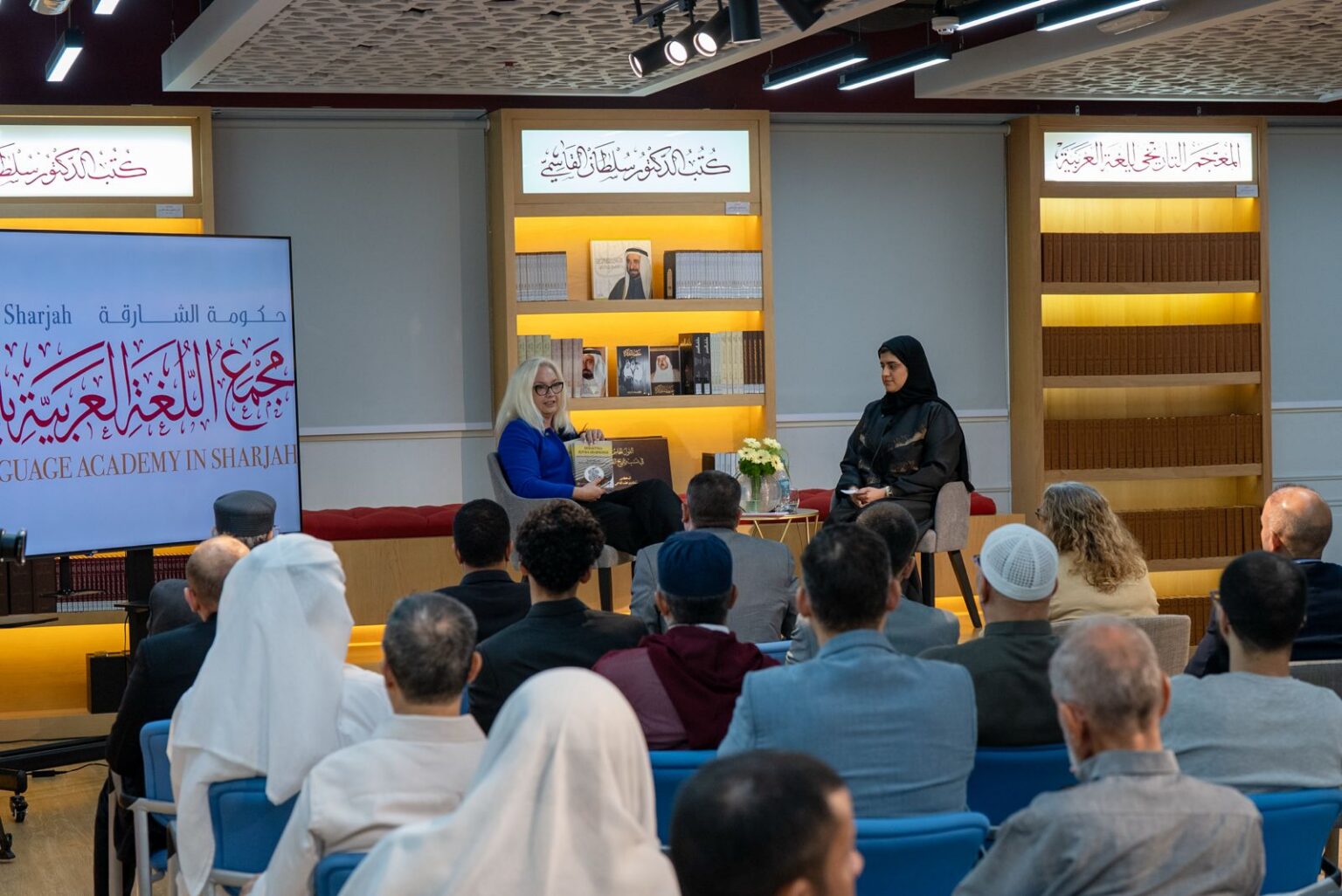
SHARJAH, 8th October, 2026 (WAM) — Dr Mohamed Safi Al Mosteghanemi, Secretary-General of the Arabic Language Academy (ALA) in Sharjah, said the academy’s language majlis exists to connect lovers of Arabic across the world, study how the language is taught and draw on the experience of its scholars.
He was speaking at the twelfth majlis, titled “Arabic in Europe: Reality and Aspirations”, which looked at how Arabic is taught in Europe and how its presence could grow. The discussion drew on Poland’s experience of teaching Arabic to non-native speakers.
The majlis also considered how Arab and European institutions could work more closely in the field. It examined the role Arabic plays in building understanding between Arabs and others, correcting stereotypes and opening a deeper view of Arab culture and society.
The guest was Dr Magdalena Lewicka, a Polish expert in Arab and Islamic studies in the Middle East and North Africa. Academics, teachers and others with an interest in Arabic attended.
Al Mosteghanemi said the academy follows the vision of His Highness Sheikh Dr Sultan bin Mohammed Al Qasimi, Supreme Council Member and Ruler of Sharjah. He said the Ruler has given Arabic lasting attention and made protecting its heritage and spreading its sciences a core part of Sharjah’s cultural project. The academy, he added, wants these meetings to produce useful knowledge, back those who teach Arabic and help them overcome the difficulties they face.
Lewicka described her path with Arabic as a conversation with a unique culture, a rich literature and a great history. Arabic words, she said, became her key to understanding Arab culture and the Arab world. The language, she said, built bridges of understanding between cultures where others saw barriers.
She called for close cooperation between the academic centres that teach Arabic to non-native speakers in Poland and the Arab world, through shared knowledge and research findings. She also asked for regular international academic conferences that bring those centres together to discuss the challenges of teaching Arabic.
Lewicka, who has written 150 research papers in Arabic, English, Polish, Russian and German, also recommended exchanges of students and academics. These would let Polish students join Arabic courses at Arab centres and give teachers chances to train and sharpen their skills. She proposed an online platform to link the institutions involved in Poland and the Arab world and allow a continuing exchange of ideas and experience.
Lewicka said learning Arabic changed how she sees the world. Early in her journey she met deeply rooted stereotypes about Arab culture and society, and working through them taught her humility and openness.
She now guides her own students through the same process. In her words, she accompanies them to the core of Arab culture and shows them how to discover the Arab world’s true, rich and varied face.
Arabic language and literature can be studied as a degree in three Polish universities, in Warsaw, Krakow and Poznan, Lewicka said. Other state and private universities offer Arabic within their foreign-language courses. Students start from beginner level, because Arabic is not available in primary, middle or secondary schools.
She said Arabic is taught at Polish universities in three main forms. It can be studied as an independent degree in Arabic language and literature, learned within degrees that require it, such as Turkish or Persian language and literature, or chosen as a foreign language within the requirements of other degrees.
Lewicka also looked back on a journey that began more than thirty years ago. She moved from learning the letters and discovering literary texts to teaching the language and encouraging dozens of students to read Arabic books. She said the metaphors and human truths in those texts made her want to share their beauty and teach her students to read between the lines and enjoy Arabic literature. Her own discoveries, years later, have become a source of inspiration for others.
Source: Emirates News Agency
