


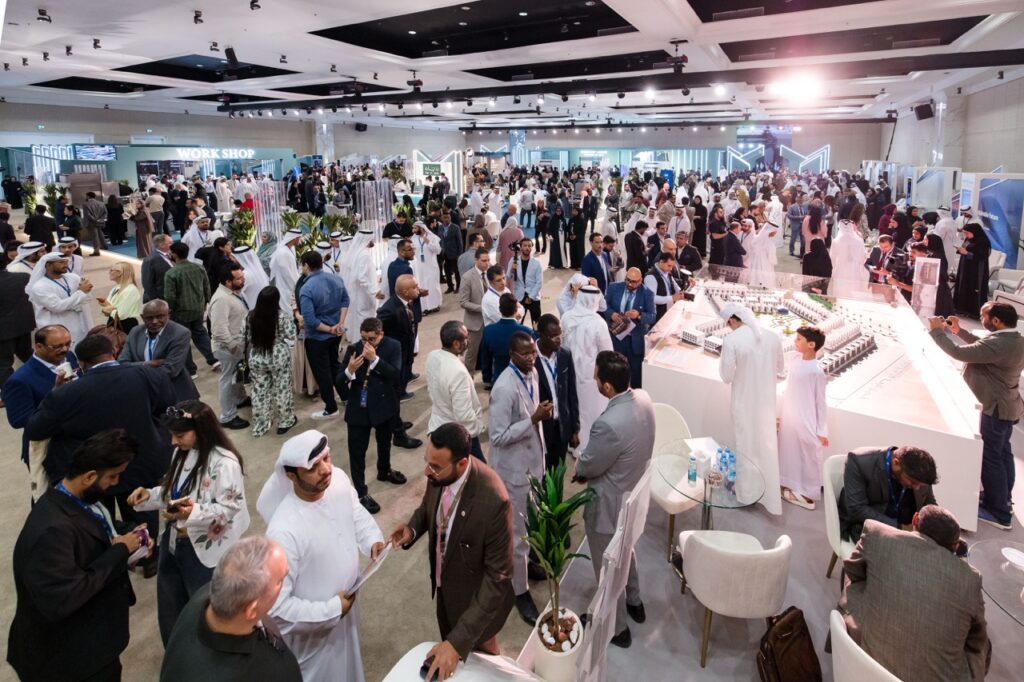
SHARJAH, 16th October, 2026 (WAM) — Government officials and industry leaders at the ninth Sharjah Investment Forum (SIF 2026) called for adaptive economic policies that expand investment in agritech, waste-to-energy projects and domestic manufacturing, while strengthening supply chains to help economies respond to global disruptions.
As the two-day forum concluded, speakers urged greater support for smaller manufacturers, wider adoption of agricultural technologies, more reliable freight networks and closer public-private cooperation to strengthen food security and maintain trade flows.
They also called for more effective implementation of economic regulations, stronger investor safeguards and easier access to government services, financing, international markets and procurement opportunities to help businesses expand their operations.
Organised by the Sharjah FDI Office (Invest in Sharjah) in collaboration with the UAE Ministry of Investment, SIF 2026 welcomed more than 10,000 participants from over 60 countries. Held at Al Jawaher Reception and Convention Centre (JRCC) under the theme “Building Adaptive Economies”, the forum featured more than 80 speakers and over 140 activities, including 80 direct business meetings.
Mohamed Alabbar, Founder & Managing Director of Emaar Properties, urged businesses to reassess their strategies every three months to respond to changing economic and technological conditions. Discussions on economic resilience also focused on strengthening domestic production, with Dr. Farah Ali AlZarooni, Assistant Undersecretary for Standardization Affairs Sector at Minsitry of Industrial and Advanced Technology – MoIAT outlining the UAE’s industrial localisation priorities. These include more than 5,000 products identified for domestic production across 12 priority sectors over the coming decade, an AED 180 billion procurement and offtake package, and the AED 1 billion National Industry Resilience Fund to support smaller manufacturers.
Transport and logistics executives called for greater flexibility in freight operations. Omar Alsebeyi, CEO of Etihad Rail Freight discussed the role of rail transport in maintaining cargo movements during disruptions, while Ritesh Ramakrishnan of Transworld stressed the growing importance of reliable delivery in supply-chain decisions.
Sharjah’s maritime gateways on the Arabian Gulf and Gulf of Oman, together with its industrial zones and inland logistics infrastructure, also featured in discussions on trade continuity. Speakers examined Gulftainer’s US$2 billion global trade infrastructure strategy and the importance of diversified logistics networks in maintaining access to international markets during disruptions.
Food security discussions examined opportunities to expand domestic agricultural production through agritech. Mohammed Saeed Al Nuaimi of the Ministry of Climate Change and Environment discussed plans to update the UAE’s Food Security Strategy 2051 in cooperation with the private sector, while Khaled Al Huraimel of BEEAH outlined Sharjah’s waste management achievements and plans to expand waste-to-energy capacity.
Government and business representatives called for investment policies that help companies expand after establishing operations. Abdelaziz AlShamsi, of the Sharjah Chamber of Commerce and Industry stressed the need for access to international markets, efficient logistics and stronger commercial relationships, while Hussain AlMahmoudi of the Sharjah Research, Technology and Innovation Park highlighted the importance of research facilities, university partnerships and intellectual property protection in bringing new technologies to market.
Mariam Rashid Bin Al-Sheikh of the Sharjah Business Women Council called for greater access to mentorship, investors and procurement opportunities for women entrepreneurs. Her recommendations drew on research involving 119 women business owners, which examined the support they need to develop and expand their businesses.
Investment and financial technology leaders also called for stronger safeguards and more effective implementation of regulations. Jigar Sagar of Triliv Holdings stressed that legislation must be translated into practical results, while Amer Al Ahbabi of Vertix Holdings emphasised investor protection, independent asset custody and sound governance as essential conditions for attracting capital.
SIF 2026 saw the unveiling of Najm, an agentic AI platform developed by Invest in Sharjah to help investors identify opportunities, initially in land, factories and industrial facilities. The announcement was accompanied by agreements with Property Finder, Bayut, and Sharjah Department of Town Planning and Survey to improve access to property information and digital investment services.
Technology executives called for a measured approach to AI adoption, with clear accountability for automated decisions. Maria Sanchez of Inception (G42) recommended introducing AI through low-risk processes where decisions can be traced and reviewed by employees. Rima Semaan of Microsoft UAE stressed the need for connected data, appropriate access controls and employees equipped to supervise AI agents.
Speakers also examined the commercial applications of AI in procurement, recruitment, investment analysis and content production. Varun Mayya of Aeos cited an example in which AI reduced certain digital content production costs by approximately 95%, while Ahmed Galal Ismail of Majid Al Futtaim discussed the growing influence of AI on customer transactions and retail operations.
Alabbar reported that Emaar maintained a 98% collection rate despite recent regional uncertainty. He said property cancellations had temporarily risen from approximately 600 to 1,200 before falling below their previous levels. Alabbar also pointed to sustained consumer activity at noon and strong hospitality performance, citing economic stability, personal security and quality education among the factors influencing investment decisions.
Sharjah’s real estate market recorded AED 46.8 billion in transactions during the first nine months of 2026, attracting approximately 10,000 new investors from more than 130 nationalities. Industry representatives discussed estimated rental yields of 8% to 12% in parts of the market, while calling for transparent property regulations, reliable infrastructure and higher standards of residential development.
Obaid Abdul Rahman Al-Mazloum of the Sharjah Real Estate Registration Department discussed the role of transparent regulation and digital property services in strengthening investor confidence. The department’s Aqari platform provides services covering property registration, contracts, resale and escrow arrangements.
Real estate, tourism and hospitality leaders called for investment in integrated communities, sustainable development and destinations that serve residents while attracting visitors.Yousif Al Mutawa of the Sharjah Investment and Development Authority (Shurooq) discussed the development of communities with accessible services and infrastructure designed to meet residents’ long-term needs.
Ahmed Obaid Al Qaseer, CEO of Shurooq, highlighted the role of heritage preservation and local entrepreneurship in tourism development, citing The Chedi Al Bait in Sharjah and Kalba Beach as examples. Khalid Jasim Al Midfa of the Sharjah Commerce and Tourism Development Authority stressed the importance of diversifying tourism source markets and encouraging domestic tourism to manage seasonal fluctuations.
Stephan Schupbach of Chedi Hospitality discussed the importance of distinctive hospitality experiences in attracting visitors, alongside the company’s exploration of AI applications in hotel operations.
Source: Emirates News Agency
