


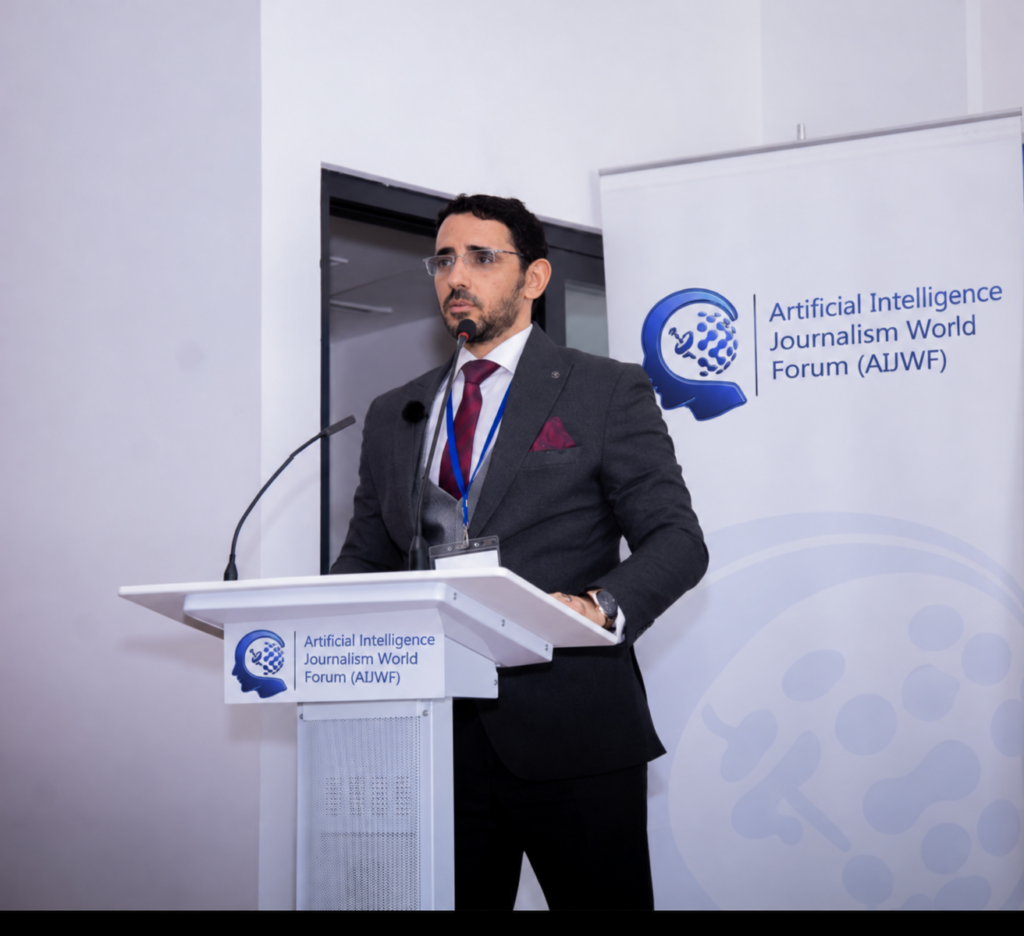
DUBAI, 23rd November, 2026 (WAM) — The University of Dubai and the Artificial Intelligence Journalism for Research and Forecasting (AIJRF), in collaboration with several Arab universities, announced that they would launch a guide to agentic AI governance on the sidelines of the sixth Artificial Intelligence Journalism World Forum. The University of Dubai will host the forum on 25th and 26th November.
Titled “Professional and Ethical Rules for Assistive Agentic AI”, the guide sets out a framework for systems that can plan, carry out tasks and take action semi-autonomously. It provides guidance for government bodies, academic institutions, businesses and technology organisations on human oversight, accountability, transparency, data protection and risk management. It aims to support responsible use of these systems and preserve the role of people in decisions with significant consequences.
The University of Dubai, the University of Khorfakkan and Liwa University in the UAE, and Badr University in Cairo and Al-Azhar University in Egypt helped prepare the guide, alongside the Arab Index for Artificial Intelligence in Universities (AIU). Academics, researchers and experts from nine countries contributed to the guide. They represented the UAE, Egypt, Saudi Arabia, Tunisia, the United States, the United Kingdom, Canada, Libya and Sudan.
Dr. Mohamed Abdulzaher, Founder and Chief Executive Officer of AIJRF, who proposed the guide, said the initiative was a step towards a common Arab framework for governing intelligent technologies. He said AI had evolved from tools for producing content and analysing data into systems capable of carrying out tasks, interacting with institutions and taking action with varying degrees of autonomy.
Abdulzaher said the rapid development of these systems called for clear operating rules that define what AI agents are authorised to do, set limits on their autonomy and establish how their performance and results should be assessed. The rules should also allow people to intervene when necessary.
“We want technology to advance, but within clear rules that protect people, institutions, and society,” he said.
He added that wider use of AI agents in government, media, education, banking and healthcare called for governance frameworks that balance innovation with professional responsibility and safeguard data privacy, information security and the digital rights of individuals and institutions.
Abdulzaher said the guide aimed to strengthen trust in agentic AI and keep it under human oversight, allowing institutions to benefit from its capabilities while upholding accountability and transparency.
The guide has three chapters. The first examines global developments in agentic AI and their implications for the economy, government and education. The second covers professional and ethical principles, including human oversight, information protection, cybersecurity, institutional compliance and ongoing ethical audits.
The third sets out the professional and ethical responsibilities of technology developers, organisations that use the systems, legislative, regulatory and supervisory authorities, and individual users. It clarifies who is accountable for the decisions and actions of intelligent systems, particularly where they could cause material harm or violate privacy.
The guide explains which tasks AI agents can perform independently and which require direct human approval. It outlines how organisations can document operations, monitor performance, correct errors and, where necessary, restrict a system’s permissions or suspend its operation. It also sets out users’ right to know what kind of system they are interacting with and to request human review of automated decisions that affect their rights or interests.
The guide builds on AIJRF’s work on professional and ethical standards for advanced technology, extending governance from digital content to the decisions and actions of AI agents within institutions. The 2026 forum will examine the future of agentic AI, its role in the digital economy and content creation, and the challenges of governing intelligent systems and strengthening public trust in their use.
Source: Emirates News Agency
