


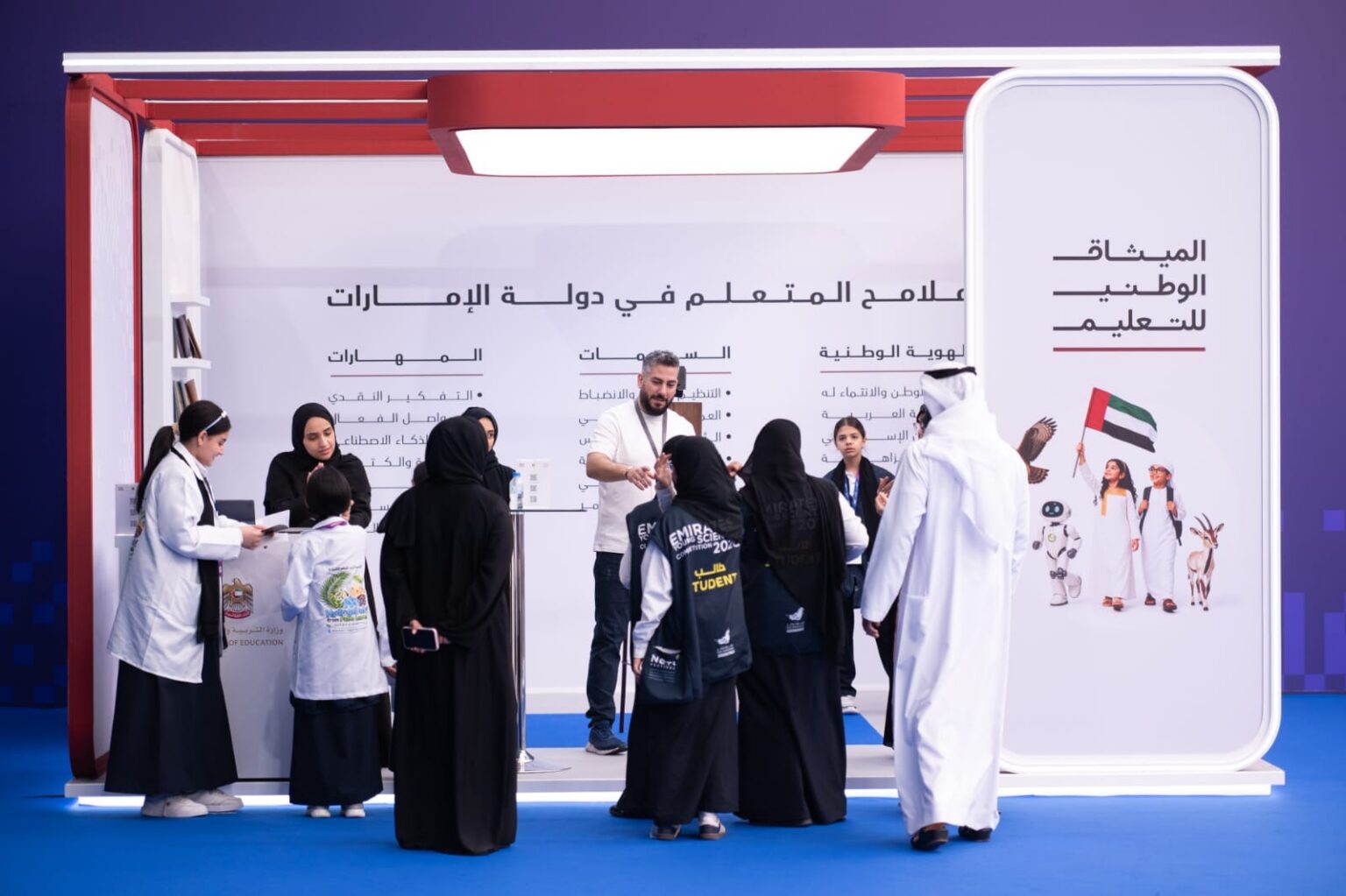
AL AIN, 11th November, 2026 (WAM) –The second day of the 8th National Science, Technology and Innovation Festival at ADNEC Centre Al Ain saw students compete and showcase innovative projects and ideas across science and technology, amid strong enthusiasm among participants.
Organised by the Ministry of Education (MoE) in collaboration with the Advanced Technology Research Council (ATRC), under the patronage of H.H. Sheikh Hazza bin Zayed Al Nahyan, Ruler’s Representative in Al Ain Region, the festival continues until 13 November 2026.
Eng. Mohammed Al Qasim, Undersecretary of the Ministry of Education, affirmed that the Festival reflects the leadership’s vision of investing in students’ capabilities and embedding innovation in educational practices. He noted that the projects and ideas presented by participants demonstrate their scientific curiosity and ability to apply their knowledge to address real-world challenges, highlighting the importance of providing opportunities that bring students’ talents to light and help them develop.
He added that the Ministry views the festival as an extension of the school’s role in developing students’ capabilities and an opportunity to see what they can achieve when provided with an environment that encourages initiative and supports experimentation. He explained that engaging with researchers and specialists and discussing their projects before judging panels gives students valuable experience that helps them review and develop their work, and also emphasised the importance of building on this experience within schools by supporting the efforts of teachers and supervisors and strengthening partnerships with scientific institutions to ensure the continued nurturing of talent and its progression towards more advanced levels of research and innovation.
Scientific conference
The second day of the Festival also marked the opening of the accompanying scientific conference, the first day of which featured six sessions exploring the evolution of technologies, the prospects for specialisation in these fields and the responsibility involved in their use, enriching the experience of students participating in the Festival and its competitions.
The sessions examined the changes technology has brought to the way people live, learn and work. Examples of local innovations and advanced technology fields were presented, highlighting the complementary roles of researchers, engineers, data experts and innovators in their development, while encouraging students to explore their interests and educational and career choices.
The six sessions also addressed the educational dimensions of engaging with these technologies, from verifying information to academic integrity and privacy protection. Through interactive scenarios, they highlighted learners’ responsibility for their decisions and work, and connected the use of modern tools with developing their research and creative capabilities and staying informed about scientific developments.
The National Education Charter: skills that prepare students for the future
The second day also featured an interactive session on the National Education Charter, focusing on skills as one of its key pillars and their role in shaping learners’ character and preparing them for the future. The session provided an opportunity to discuss how this pillar can be translated into practices connected to students’ experience at the Festival, where they apply their knowledge through research and experimentation and develop their ability to analyse problems, collaborate and present and discuss ideas.
The session also highlighted the importance of these skills in being able to respond flexibly to challenges and use feedback to improve performance, giving participation in scientific competitions an educational dimension that supports the development of students’ capabilities and self-confidence and prepares them to contribute effectively and responsibly to their communities and keep pace with the demands of life and work.
The festival continues until 13 November. Its scientific and interactive programme and student competitions culminate in a closing ceremony that will include the recognition of winners and celebration of their efforts, and acknowledgement of the contributions of schools, families and supervisors in nurturing their talents and supporting their scientific journeys.
Source: Emirates News Agency
