


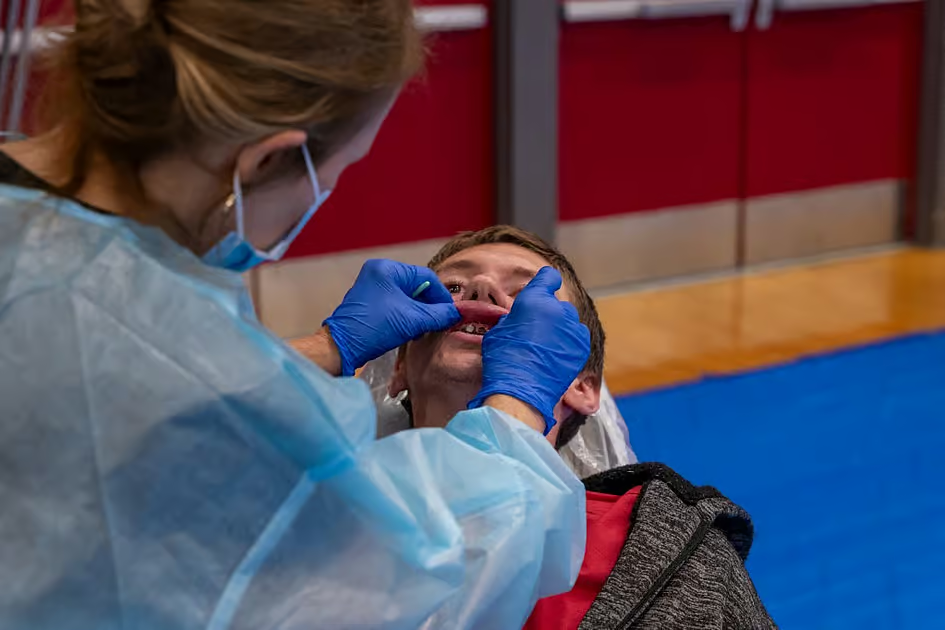
Scientists have developed a gel that could one day help dentists rebuild damaged tooth enamel, potentially offering a new way to treat tooth erosion and sensitivity.
The material, created by researchers at the University of Nottingham in the UK, uses proteins to encourage the growth of minerals that form the protective outer layer of teeth.
The findings were published in the journal Nature Communications in November 2025 and have recently attracted renewed attention.
Stay up to date with the latest news. Follow KT on WhatsApp Channels.
Although the results are promising, the treatment has so far been tested in laboratory conditions rather than established as an effective treatment for patients.
Why can’t tooth enamel repair itself?
Tooth enamel is the hard outer layer that protects teeth from everyday wear, changes in temperature and acids produced by bacteria.
Unlike bones, enamel does not contain living cells capable of rebuilding it once significant amounts have been lost.
Saliva and fluoride treatments can help replace minerals during the earliest stages of damage, but they cannot fully recreate enamel that has worn away.
How does the new gel work?
The gel contains specially designed proteins that imitate some of the natural processes involved in forming enamel during childhood.
When applied to damaged enamel, it creates a thin framework that helps attract calcium and phosphate, minerals naturally found in saliva.
These minerals then form crystals that grow in alignment with the existing enamel structure. The process could allow new mineral material to integrate with the tooth surface rather than simply forming a temporary coating.
What did researchers find?
Scientists tested the material on human teeth outside the body, using laboratory conditions designed to simulate mineral growth. They found that the gel encouraged the formation of a new mineral layer with a structure similar to natural enamel.
The regenerated material also showed encouraging mechanical properties during tests designed to simulate brushing, chewing and exposure to acidic substances.
However, these findings do not establish whether the gel can restore heavily damaged teeth or prevent cavities in patients over the long term.
Could it help people with sensitive teeth?
Potentially. Tooth sensitivity can occur when enamel wears away or the underlying dentine becomes exposed.
Researchers found that the gel could also encourage the formation of an enamel-like mineral layer over exposed dentine.
If future clinical studies confirm the results, the technology could offer another approach to managing sensitivity and protecting damaged teeth.
Is the treatment available at dental clinics?
The research team has been working towards commercial development through a company called Mintech-Bio. However, the published laboratory findings do not establish that the treatment is approved, widely available or clinically effective for patients.
Further human studies are needed to determine its safety, durability and effectiveness in everyday dental care.
For now, the gel represents a promising development in dental research rather than a replacement for existing treatments.
What happens next?
Researchers will need to establish how the regenerated material performs inside the mouth over time, including its ability to withstand daily chewing, brushing and exposure to food and drinks.
If the results can be reproduced in clinical trials, the technology could eventually give dentists a new way to repair some forms of enamel damage.
Until then, established preventive care and professional dental treatment remain important for protecting teeth.
Source: Khaleej Times
