


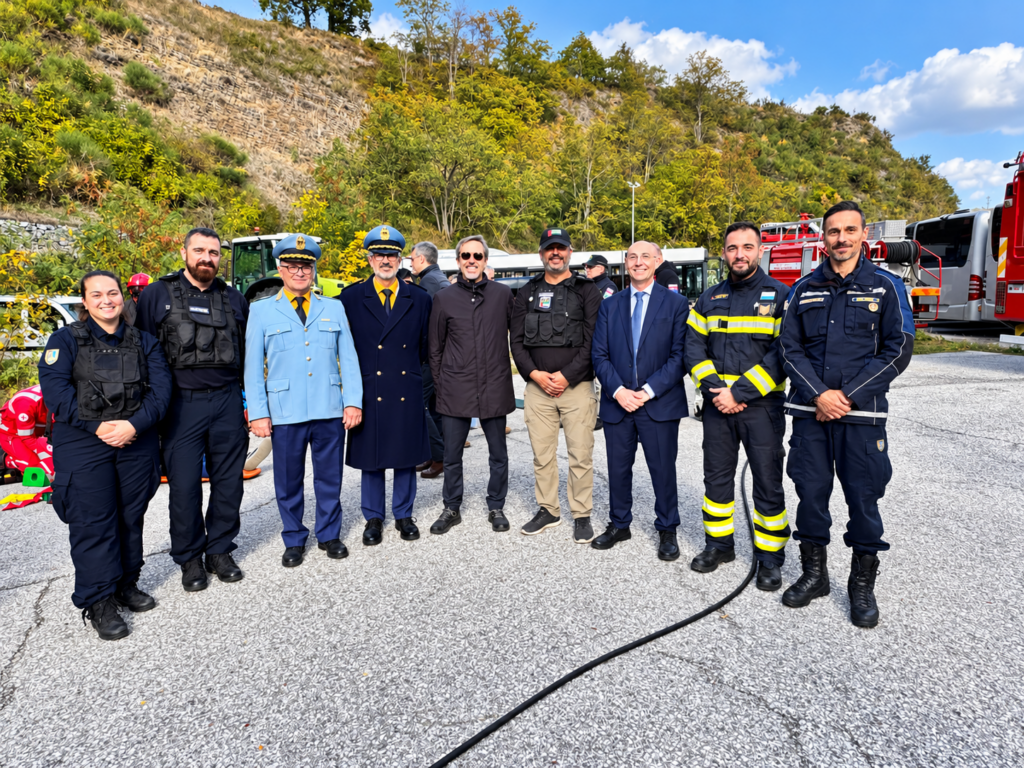
SAN MARINO, 27th October, 2026 (WAM) — The European Centre for Disaster Medicine (CEMEC), based in the Republic of San Marino, in collaboration with the UAE National Medical Preparedness and Response Programme (JAHEZIYA), announced the launch of the Middle East and North Africa Disaster Medicine Programme (MENA Disaster Medicine Programme), a joint international initiative aimed at strengthening national medical preparedness, advancing disaster medicine education and training, enhancing emergency medical response capabilities, and improving healthcare system resilience across the Middle East and North Africa.
The announcement was made during the European Disaster Medicine Forum held in San Marino, attended by 50 leading experts and representatives from the European Centre for Disaster Medicine, the European Union, and the World Health Organisation.
The launch builds upon the institutional cooperation established between the two organizations through the Memorandum of Understanding signed in the Republic of San Marino on 15 August 2023, which created a framework for international cooperation in disaster medicine, professional training, scientific research, innovation, and the exchange of expertise.
During its initial phase, the Middle East and North Africa Disaster Medicine Programme will operate as a joint international programme under the existing cooperation framework between CEMEC and JAHEZIYA, drawing upon the academic, scientific, and operational capabilities of both institutions.
Professor Roberto Mugavero, President, European Centre for Disaster Medicine – Republic of San Marino, said:
“The launch of the Middle East and North Africa Disaster Medicine Programme represents an important strategic step toward strengthening scientific and academic cooperation between Europe and the countries of the Middle East and North Africa, while developing more resilient and effective national and regional medical preparedness systems.
”Our collaboration with JAHEZIYA reflects a shared vision of harnessing international scientific expertise, artificial intelligence, advanced medical technologies, and high-fidelity medical simulation to enhance disaster medicine education and training and strengthen operational readiness.”
”We are pleased to entrust Dr. Adel Alshamry Al Ajami with the leadership of the Middle East and North Africa Disaster Medicine Programme, in recognition of his extensive professional experience and achievements in establishing and managing integrated national medical preparedness and response initiatives,”he added.
”We believe that the future of disaster medicine depends on international collaboration, technological innovation, institutional integration, and sustainable capacity building, contributing to the protection of lives and strengthening the resilience of nations in responding to emergencies and disasters.”
Dr. Adel Alshamry Al Ajami, CEO of Zayed Giving Initiative, and CEO of JAHEZIYA, said: “I am honoured to have been entrusted with the responsibility of leading the Middle East and North Africa Disaster Medicine Programme, an international initiative that provides an important opportunity to build upon the United Arab Emirates’ experience in developing integrated national medical preparedness and emergency response systems.
”Through our collaboration with the European Centre for Disaster Medicine, we aim to establish a regional and international network bringing together universities, professional training academies, scientific experts, healthcare institutions, government authorities, private-sector partners, and humanitarian organisations,” he added.
”Our strategic priorities include strengthening the integration of civilian and military medical systems, enhancing the preparedness of hospitals and prehospital emergency medical services, building the capacities of frontline medical responders, and incorporating artificial intelligence, advanced simulation, and emerging technologies into national medical preparedness systems,” he explained.
We will also work to develop an innovative and financially sustainable operational model that supports the continuity of academic activities, professional training programmes, and scientific research while expanding access to specialized education and training across the region.
”Our vision is to transform international partnerships into national capabilities, scientific knowledge into practical professional competencies, and innovation into sustainable medical preparedness and emergency response systems,” he said.
The Programme will focus on seven principal strategic areas:
1. National Medical Preparedness
Strengthening hospital and prehospital emergency medical response systems, improving institutional readiness, and enhancing disaster management capabilities.
2. Civilian–Military Medical Integration
Promoting coordination and integration in medical preparedness among civilian healthcare institutions, military medical services, police, civil defence, and humanitarian organisations.
3. International Academic Partnerships
Establishing strategic partnerships with leading universities, scientific institutions, professional training academies, and international disaster medicine experts.
4. Education, Training, and Capacity Building
Delivering specialized professional training programmes, medical simulation exercises, instructor development initiatives, and disaster medicine leadership programmes.
5. Artificial Intelligence and Innovation
Integrating emerging technologies, predictive analytics, digital education, and advanced medical simulation into emergency medical preparedness and response systems.
6. Humanitarian and Disaster Medical Response
Strengthening capabilities in mass-casualty incident management; chemical, biological, radiological, nuclear, and explosive emergency preparedness; emergency and critical care; humanitarian medicine; and field hospital operations.
7. Financial and Operational Sustainability
Establishing an innovative self-financing model based on professional training, institutional agreements, academic partnerships, scientific research, and corporate social responsibility initiatives.
Source: Emirates News Agency
