


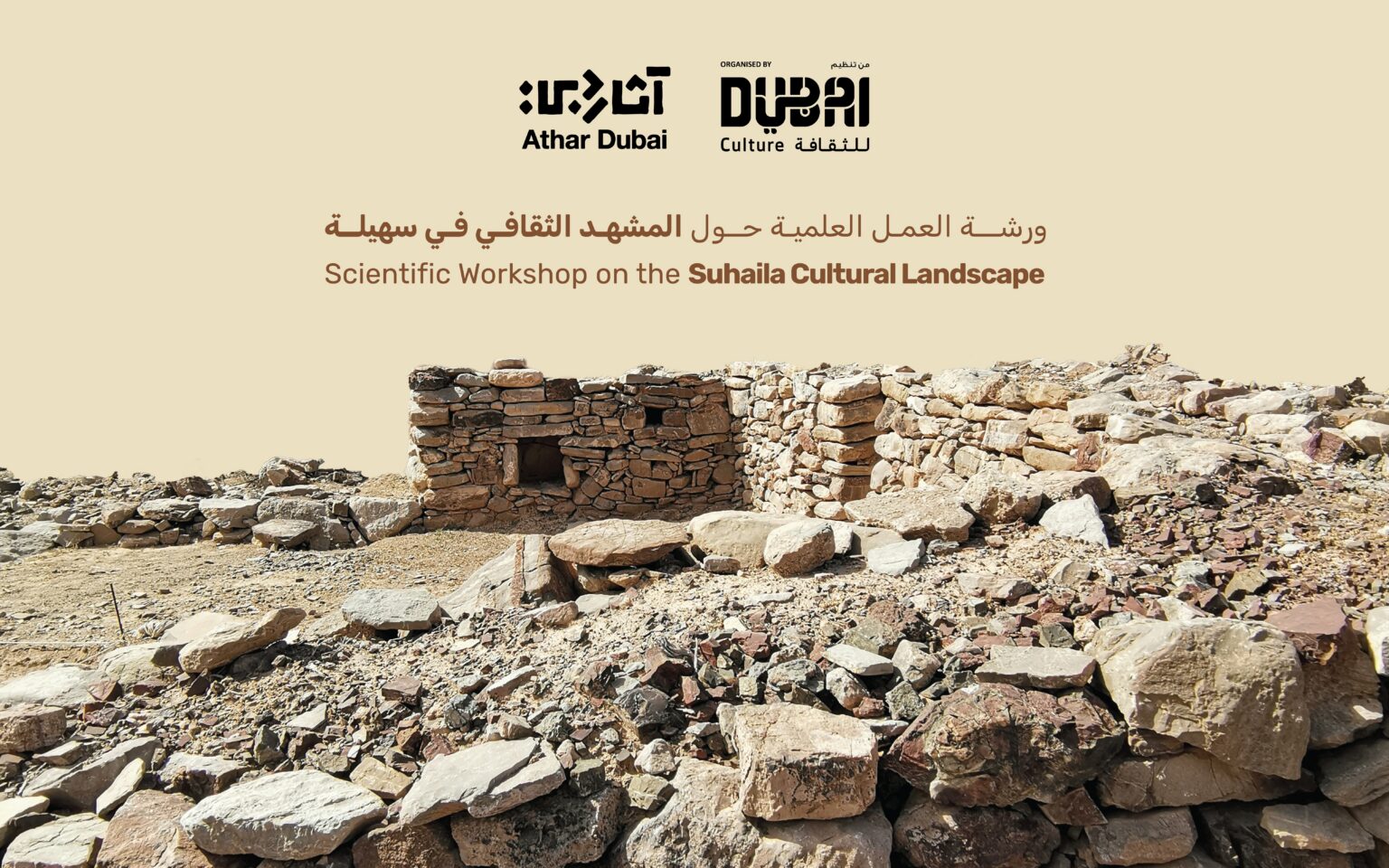
DUBAI, 27th October, 2026 (WAM) — Dubai Culture and Arts Authority (Dubai Culture) has conducted a scientific workshop on the Suhaila Cultural Landscape – Hatta, Dubai to deepen our understanding of Hatta’s history and archaeological significance.
The workshop will examine the results of findings from recent studies and excavations and explore international best practices in heritage conservation, management and documentation. It supports the Authority’s efforts to strengthen collaboration with international experts and academic institutions, highlight the significance of Dubai’s archaeological and historical sites, and to enhance the emirate’s presence on the global heritage map.
The scientific workshop is being held on the 27th and 28th of October 2026 in Hatta, will bring together experts to examine the Suhaila Cultural Landscape – Hatta’s historical and environmental characteristics. Participants will help to create a research platform to exchange scientific expertise and knowledge on settlement patterns and the relationship between past communities and the mountainous environment. Dubai Culture aims to establish a scientific framework that reflects the site’s character and cultural significance, link research to conservation and management, and strengthen cooperation among research institutions, government entities, and the local community.
The discussions will help identify priorities for the next phase of work as part of preparations for site management and protection and to prioritize the future research endeavours for the Suhaila Cultural Landscape – Hatta.
Bringing together archaeologists, researchers and heritage management specialists, the workshop featured an opening address by Dr Fatma Ali Almamari, Director of the Cultural Heritage Department at the UAE Ministry of Culture. Specialist sessions, research presentations and panel discussions examine Dubai’s and Hatta’s archaeological landscape, settlement history, and how communities used the mountainous terrain and its natural resources. Highlights include ‘An Overview of Archaeological Sites in the Emirate of Dubai’, presented by Dr Mansour Boraik, Antiquities Expert at Dubai Culture, and ‘Archaeological Sites in Hatta: A Focus on the Suhaila Cultural Landscape’, delivered by Hassan Zein, the Authority’s Chief Archaeology Specialist. Afra Mahmoud Mohammed, Senior Wildlife Officer at the Dubai Environment and Climate Change Authority, will discuss Hatta’s mountain environment and its relationship with historical patterns of settlement and human activity.
The programme also features international case studies on identifying Outstanding Universal Value and managing archaeology sites. Jérémie Schiettecatte of the French National Centre for Scientific Research (CNRS) examines the experience of Al-Faw in Saudi Arabia in ‘From Fragmented Knowledge to an Integrated Vision: Identifying Outstanding Universal Value’. Abdulrahman Rashed Al Nuaimi, Head of World Heritage Sites Management at the Department of Culture and Tourism – Abu Dhabi, shares lessons in ‘From World Heritage Inscription to Site Management: The Experience of the Cultural Sites of Al Ain’. Sadagat Davudova, Deputy Chair of the Reserves Management Center under Azerbaijan’s State Tourism Agency, is presenting ‘Cultural Landscape of Khinalig People and the Köç Yolu Transhumance Route’, while Martin Price, Executive Director at Insuco, discusses stakeholder engagement, drawing on experiences from Saudi Arabia and Uzbekistan.
Specialist sessions examine the plans for the development of conservation and site management of Suhaila landscape – Hatta. Contributors include Eng. Bader Mohammed Al Ali, Director of the Antiquities Department at Dubai Culture, alongside François Cristofoli and Simone Ricca of RC Heritage. These discussions help inform an initial management framework for the Suhaila Cultural Landscape – Hatta, clarify stakeholder roles and coordination, and establish research and conservation priorities. The aim is to bring together scientific, institutional and community efforts to protect the site and its cultural significance.
Muna Faisal Al Gurg, CEO of the Museums and Heritage Sector at Dubai Culture, emphasised the role of archaeological conservation in preserving Dubai’s identity and cultural heritage, and the importance of scientific research in documenting its history.
She said, “The Suhaila Cultural Landscape – Hatta is an important part of Dubai’s historical memory. It reflects the enduring relationship between the people of the UAE and their land, and their ability to adapt to the environment and use its resources across different periods of history. Through this workshop, we aim to strengthen scientific and institutional collaboration, exchange expertise, deepen our understanding of the site, and develop an integrated approach to its conservation. This work will also help us share its historical and human significance.” She added that Dubai Culture is committed to raising public awareness of the emirate’s archaeological sites and helping future generations understand their value as records of the communities that once inhabited the region.
Eng. Bader Mohammed Al Ali highlighted the workshop’s role in bringing specialists together to examine research on the Suhaila Cultural Landscape – Hatta and identify priorities for further investigation and documentation. He said: “Research at Suhaila archaeological site sheds light on human settlement in Hatta, including how communities adapted to the mountainous landscape and managed water and agricultural resources. Through surveys and excavations, Dubai Culture is building a body of knowledge to trace the site’s development, document its architectural and environmental characteristics, and identify its conservation and management needs.” He also emphasised the value of collaborating with specialized universities and scientific institutes to advance research and strengthen methodologies, and of international expertise to guide the next phase of work.
The programme includes field visits to Suhaila 1 and Suhaila 3 and Hatta Falaj, giving participants first-hand insight into the area’s archaeological features and historical and environmental characteristics.
Source: Emirates News Agency
