


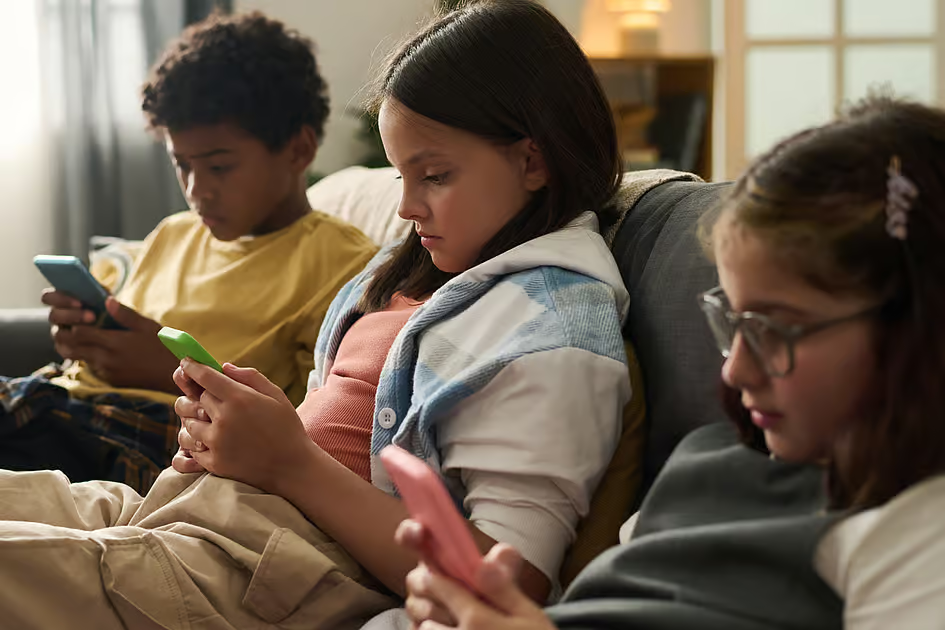
For Dubai resident Lamya Hisham, there is one phrase her children know will not help them get something they want: “But everyone has it.”
The mother of two children under the age of 10 said requests for particular shoes, school supplies, gadgets and other trending items have become increasingly common as her children have grown older.
“They know not to come to me and say, ‘But everyone has it’, because that is not a reason for us to buy something,” she said.
Instead, if her children want something that is not essential, they have to explain why they want it.
“We try to make it fun for them, and somehow it has actually helped with their communication skills. They have to explain why they want something, and sometimes it even helps them understand for themselves why they want it,” Hisham said.
Her son once told her he wanted a Spider-Man toy because he believed it would give him “powers”. “It was funny, but at least he had a reason,” she said.
For another parent, Marwa Al Amin, navigating those requests requires more flexibility. She said she has a soft spot for her daughter because she remembers how comparison and friendships can feel during the school years.
Stay up to date with the latest news. Follow KT on WhatsApp channels.
“You can’t explain to a child that a game, an item or anything else is overpriced. You don’t necessarily want to discuss money with them, and you can’t always convince them that it’s just a trend and everyone will forget about it in a week,” she said.
As UAE families prepare for the return to school, a new backpack, particular shoes, the latest stationery or a new device can quickly become part of the shopping list.
But does wanting the latest products mean children are becoming more materialistic, or are they responding to an environment where brands and consumption are increasingly visible?
Dr Rita Figueiredo, licensed psychologist and managing director of Peninsula Psychology, cautions against labelling today’s children as more materialistic than previous generations.
“Children have always wanted things, compared themselves with other children and been interested in whatever was considered desirable at the time,” she said.
What has changed, she explained, is their environment.
“Children are exposed to an enormous amount of consumption, advertising and lifestyle content, and they are exposed to it much more frequently and from a much younger age.”
Social media has also widened children’s reference groups. Instead of comparing themselves only with classmates, cousins or neighbours, they can now see what influencers and children around the world own and experience.
However, Figueiredo said growing up around wealth does not automatically make a child entitled or materialistic.
“A child can enjoy beautiful things, travel frequently and have a very comfortable life without believing that these things determine their value,” she said. “It becomes more concerning when possessions start functioning as evidence that they are successful, important, lovable or socially acceptable.”
School item to become more than an item
As Khaleej Times previously reported, UAE families face expenses beyond tuition, including uniforms, books, stationery, transport, devices, meals and extracurricular activities.
Personal preferences can add to that bill. Lisa Johnson, Superintendent at American Academy for Girls, previously told Khaleej Times: “Children may need a backpack and pencil case, but the brand or style that is ‘in’ that year can quickly increase the price.”
Figueiredo said possessions can begin acquiring a different meaning as children become more socially aware.
“A shoe is no longer only a shoe and a phone is no longer only a way of communicating; these things can start communicating something about who you are, which group you belong to and whether you fit in,” she said.
When children say “everyone has it”, she added, they rarely mean literally everyone.
“If five influential children in a class have a particular phone or shoe, it can genuinely feel to another child as though everyone has it.”
Wanting things is normal
Parents should not, however, treat every wish list or request for something trendy as a sign of materialism.
“Children want things, adults want things, and there is nothing inherently unhealthy about looking forward to buying something, keeping a wish list or being excited about a particular object,” Figueiredo said.
Instead, parents can look at how children respond when they do not immediately get something. Can they wait until a birthday, save for it, choose between items or accept that their parents have decided not to buy it?
Giving children everything they ask for can remove opportunities to learn how to wait, prioritise and cope with disappointment.
Figueiredo said parents who can afford something also do not need to pretend otherwise. They can instead separate affordability from choice by saying: “Yes, technically we could afford this, but that doesn’t mean we are choosing to spend our money on it.”
But constantly saying no or shaming children for wanting things can also be harmful.
“Children can internalize these judgments and become ashamed of what they want or less comfortable talking to their parents about comparison, envy and the pressure to belong,” she said.
Rather than trying to remove material things from children’s lives, Figueiredo said parents can help them build their identity around relationships, interests, abilities, values, culture and personality.
“The aim is for their sense of worth and belonging to have many other foundations, so what they own does not become the main way they understand themselves or evaluate other people.”
Source: Khaleej Times
