


Two Pakistani series, one yet to premiere, have triggered controversy in India, with calls for both to be banned amid strained relations between the arch-rival nations. Others, however, have questioned what they see as selective outrage over Pakistani entertainment content.
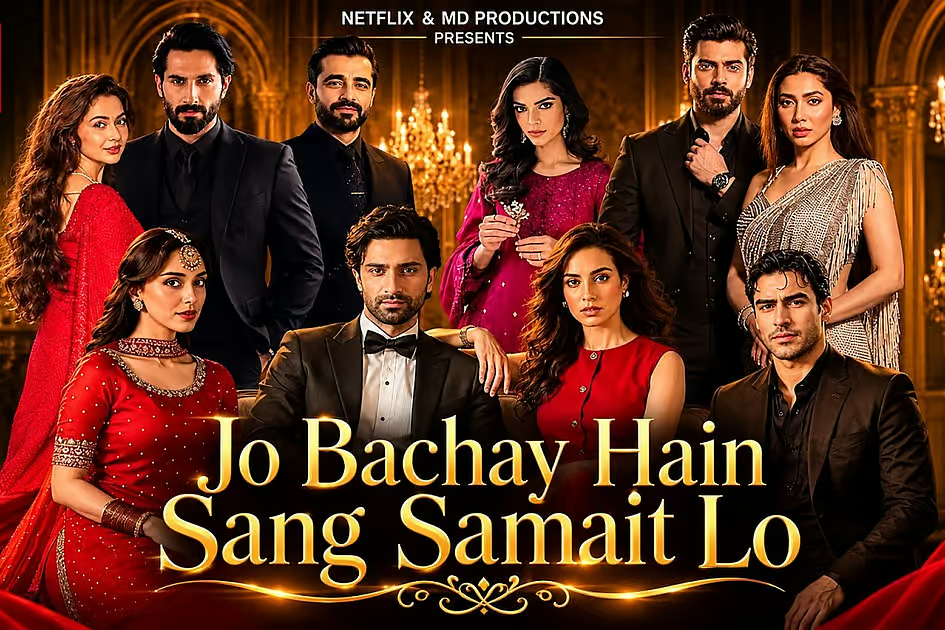
Netflix released on Tuesday the trailer for its first original series from Pakistan, Jo Bachay Hain Sang Samait Lo. Known internationally as All the Love Our Hearts Carry, it features an ensemble cast of some of Pakistan’s biggest stars, including Fawad Khan, Mahira Khan, Sanam Saeed, Hania Mir and Ahad Raza Mir. It is scheduled to be released on December 4.
Netflix released the trailer with the tagline: “Three generations, 6 love stories, and one question: Is the love we carry in our hearts enough?”
But as soon as the trailer landed on the platform, many Indians were quick to demand that the series be banned from being released in the country.
Stay up to date with the latest news. Follow KT on WhatsApp Channels.
Ashok Pandit, filmmaker and chief adviser to the Federation of Western India Cine Employees, also demanded that the government stop the telecast of the show.
The All-India Cine Workers Association wrote to Prime Minister Narendra Modi on Tuesday seeking to block the release of the series in the country.
Many Indians are also angry over screenings of the Pakistani drama Dar-e-Nijaat at cafes in the capital, Delhi, as well as in Bengaluru and Lucknow.
The series, which premiered on Pakistan’s ARY Digital and features actors Sheheryar Munawar, Durefishan Saleem and Nameer Nawaz Khan, is also available on YouTube, where Indian viewers have been watching it despite restrictions.
Selective outrage
Supporters, however, have come out in defence of the two series, arguing that art has no borders and accusing critics of selective outrage, particularly as India and Pakistan continue to face each other in international cricket tournaments.
Many also questioned the apparent double standards, pointing to BCCI (Board of Control for Cricket in India) chief Jay Shah, son of India’s Home Minister Amit Shah, and the revenue generated from India-Pakistan cricket matches.
“When Jay Shah makes crores from India-Pak cricket matches, it is ‘sports’; when a web series comes on Netflix, it suddenly insults martyrs,” one user wrote on X.
Another user questioned the selective outrage, asking why similar objections were not raised every time India and Pakistan played a cricket match.
“I am Indian…I can say that it’s a double standard of Indian government…they can play cricket just to earn some millions but here they will show nationalism…double standard government and double standard andhbhakts (blind devotion)”
India-Pakistan rivalry
India and Pakistan have remained arch-rivals since the subcontinent was divided in 1947 following independence from British colonial rule.
The two nations have fought three wars and were on the brink of another conflict in February 2019 after India launched airstrikes inside Pakistan’s Balakot, followed by counterattacks by Pakistani fighter jets and the downing of an Indian aircraft.
The two nations were involved in another military confrontation in May last year, a month after the terror attack in Kashmir’s Pahalgam, in which 25 tourists and a pony operator were killed.
Both view each other with suspicion, and diplomatic and trade relations remain strained, largely over the disputed Kashmir region, which both rival nations claim in its entirety but govern in parts.
Pakistani singers and artists have historically appeared in Bollywood films and been respected in India’s arts scene, but they were unofficially banned from performing in the country following a terrorist attack on the army’s Uri base camp in Kashmir in 2016, in which at least 19 army personnel were killed.
New Delhi had vowed to take revenge for the attack and launched airstrikes called Operation Sindoor, named in honour of the widows who lost their husbands in the attack on April 22.
India’s Ministry of Information and Broadcasting subsequently directed OTT platforms, streaming services and digital intermediaries operating in the country to discontinue all content originating in Pakistan, including web series, films, songs and podcasts, citing national security concerns. The social media accounts of several Pakistani actors also became inaccessible to users in India.
India’s CBFC (Central Board of Film Certification) had in 2022 stalled the release of their highly acclaimed blockbuster Maula Jatt, which was set to be screened in a limited number of theatres in Punjab and Delhi. It would have been the first Pakistani film to be released in India in more than a decade, but the release was halted following protests from politicians and right-wing Hindu outfits.
Source: Khaleej Times
