


There are two Ramayanas that Indian audiences encounter—one they have actually read over the years and the other they see on the screen. What they read is an epic that looks at its characters and the moral positions they occupy with angularity. What they often see on screen, however, does not always afford the narrative the complexity that makes Ramayana the epic that it is. Ravana is the caricatured villain, Surpanakha is deemed demonic seductress and Kaikeyi embodies the stereotype of the evil stepmother whose decision paves the way for Rama’s 14-year exile.
There have been many versions of Ramayana, and going through different retellings unearths context and perspectives that make even the anti-heroes and anti-heroines of the epic more nuanced characters. And one of them is Kaikeyi.
The third and favourite consort of King Dashrath, she demands Rama be sent to 14-year exile and that her son Bharata be made the king of Ayodhya, as was promised to her. In many ways, her demands set in motion the circumstances that allow Vishnu’s avatar Rama to realise his destiny by annihilating Ravana. But on her own, Kaikeyi remains a vilified figure.
The many shades of Kaikeyi
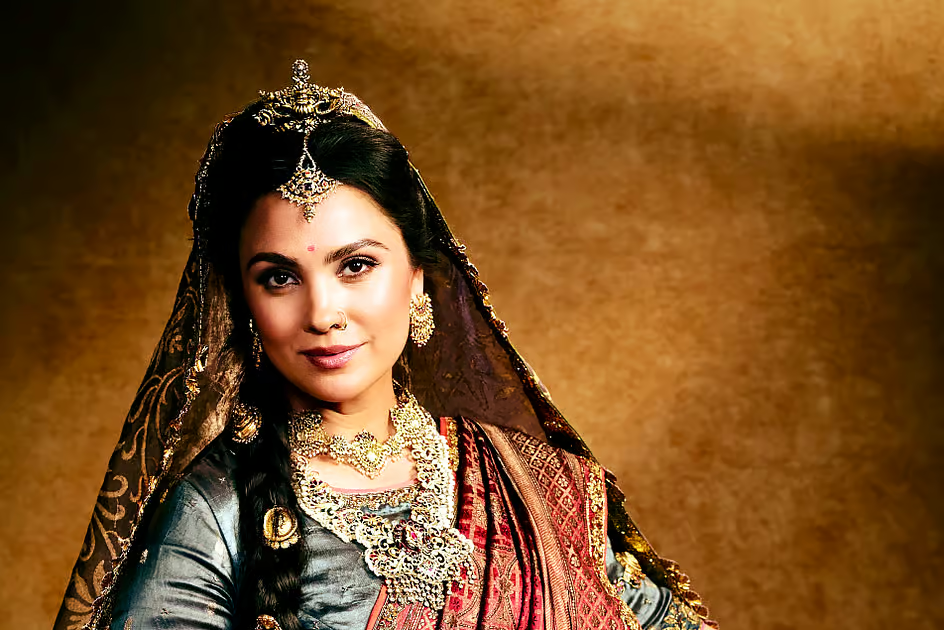
One of the real triumphs of Nitesh Tiwari’s magnum opus has been the amount of perspective he has given to all characters of the epic, Kaikeyi included. In the film, she is as much a loving mother to Rama as she is to her own son Bharata. And yet, the desire to protect the latter’s right to the throne of Ayodhya takes precedence over everything else when Rama is about to be anointed the king. In compelling the king to grant her her wishes, Kaikeyi is being a mother first, says former Miss Universe Lara Dutta who plays the character Kaikeyi. There are many shades to Kaikeyi — she is loving, astute, smart, but also insecure, fearful and guilt-ridden. “As a mother, somewhere you feel all these emotions—fear, insecurity, love. A lot of times you have conflicting emotions within you when it comes to your child—sometimes you want the best for them and yet you don’t want them to struggle,” she says.
Lara was never apprehensive about playing a role that has been traditionally vilified. She remembers jumping out of her seat when director Nitesh Tiwari first told her that he wanted her to play Kaikeyi. Her reasons? “The dichotomy of being caught in the crossfire of being a mother to both Bharata and Rama, but also having a sense of duty that goes well beyond just motherly love to fight for what she thought was her own son’s right, and betraying another son in the process.”
Kaikeyi is also no ordinary woman in Ramayana. “She was a warrior princess, she was raised by Manthara who becomes her mother figure. She was also Dashrath’s charioteer in the war between the devas (gods) and asuras (demons), and actually ensured his safety which is when he gave her the two boons,” says Lara. “In fact, when Dashrath asks for Kaikeyi’s hand to her father, he promises that the son she bears from the marriage will inherit the throne. Therefore, if you actually look at it, Kaikeyi was not asking for something that was not hers to have; she was asking for something that was promised to her.”
Praise galore
The real validation for any actor playing Kaikeyi is in the hatred she is able to evoke in the audience. And Lara has managed that quite effectively, especially during the interval scene when the trio of Rama, Sita and Laxman embark on the 14-year-long exile and the audiences are left teary-eyed while blaming Kaikeyi for what has unfolded. Actress Sheeba Chaddha plays Manthara, Kaikeyi’s family servant who has also raised her and is hence almost a maternal figure to her. Manthara is also a foil to Kaikeyi. “I don’t think you can separate Kaikeyi and Manthara from each other. Their combination is required for the audience to feel the transformation from pure motherly love to having that 180-degree turn. And it is difficult because Ramayana is a long film, so you have to convey all those complex emotions in a few scenes.”
Ramayana is also one of those films whose trailers received mixed reviews but the film itself has left the audiences spellbound. “I had never worked on a film that had sets of this immense scale. And the technology was, of course, awe-inspiring.” And then there was Rama himself. Lara makes a nuanced point about Ranbir Kapoor’s performance, calling it “a masterclass in restraint”. “I cannot tell you what it is like for an actor to embody divinity, to have all your tools taken away, your access to expressing emotions that are relatable. Rama is maryada purushuttom (the supreme man who embodies honour, propriety and righteousness), he is above petty emotions like anger, jealousy or joy. For an actor to be able to portray this only through his eyes is one of the hardest things to do.”
Understanding Rama and Ravana
The film begins with the backstory of Ravana and gives context to his motivations. Raven is a learned asura who fights the devas for his people. In his grand speech after taking Lanka’s throne, he declares that his subjects will have access to the same privileges as him. The allure of Ravana in the film does not come only from the boon granted to him or his physical strength, it also comes from the eloquence granted to him. Lara says this was an important narrative decision. “Ravana was not just the king of Lanka, he was a learned man, he was a man of the arts. The fact that Ramayana begins with his story is incredible. And no, he has not been glorified in the process. The makers of this film are very astute and smart. If the villain of the story is not built up to be larger than life, how will you show the enormity of the act of vanquishing him in the second part? So, you also need to look beyond what you are seeing.”
While the subject matter of the film may not have been light, the actress remembers enjoying having some light-hearted moments with her co-stars, Arun Govil in particular. “I think he actually doted on me the most,” Lara jokes. “He is from Meerut and would bring a fruit from there called Laxmanphal and that would cause a lot of humour on the set.”
The film is currently enjoying a successful run at the box office and such is the frenzy that many are asking if the two-year wait for the second part of Ramayana is too long. “All good things are worth waiting for. There is a lot of post-production work that goes into films of this scale. I think it is a smart decision,” she says. “Two years will just fly.”
Source: Khaleej Times
