


A new Covid-19 variant has been the latest talk of the town, after cases were detected in some countries across the globe.
The first documented case of the PJ.2.1 variant was found in Ontario, Canada, in May this year. Coming from the lineage of the SARS-CoV-2, it was found to have multiple genetic changes rather than developing mutations over time.
Early laboratory findings suggest that it may bind more effectively to the ACE2 receptor, which the virus uses to enter human cells. However, there is currently no convincing evidence that PJ.2.1 causes more severe illness, higher hospitalisation rates or more deaths than other circulating Covid-19 variants.
Stay up to date with the latest news. Follow KT on WhatsApp Channels.
The variant is being investigated, and some of the available findings are still preliminary.
What are the symptoms of PJ.2.1?
According to the World Health Organisation, symptoms associated with PJ.2.1 may resemble those of the common cold or influenza.
The symptoms reported or considered possible include:
-
Sore throat
-
Fever
-
Cough
-
Runny nose
-
Nasal congestion
-
Fatigue
-
Headache
-
Muscle aches
-
Chills
However, two symptoms have particularly stood out, according to Russian infectious disease specialist and virologist Elena Malinnikova. These are severe sore throat and prolonged fatigue. Some reports suggest that the variant may cause a more intense throat infection than certain previous variants and that patients may experience tiredness that persists after the initial infection has improved.
It is important to know that symptoms alone cannot confirm whether a person has PJ.2.1. Testing is necessary to identify Covid-19, and genomic sequencing is needed to identify the particular variant.
Where has PJ.2.1 been detected?
After its initial detection in Canada, PJ.2.1 cases have been reported across US states, Spain, France, Israel, Singapore, Australia and New Zealand.
The World Health Organisation (WHO) said it is closely monitoring the emerging variant amid growing concern over its spread globally.
Public Health Ontario’s genomic surveillance data revealed that PJ.2.1 made up 25.2 per cent of sequenced SARS-CoV-2 samples from September 20 to October 17, rising from 16.9 per cent in the previous four-week period.
Hong Kong’s Centre for Health Protection also detected the variant in its JN.1 lineage surveillance data, according to its November 5 update. However, the reported percentage covers the wider JN.1 lineage and does not reflect PJ.2.1’s share specifically.
Is PJ.2.1 more contagious than previous Covid-19 variants?
One of the main reasons PJ.2.1 is attracting scientific attention is its apparent rapid growth. A study by researchers from the German Primate Center and Hannover Medical School, published as a preprint on October 8, 2026, reported that PJ.2.1 was spreading in the US, Canada and Spain.
Researchers revealed that its spike protein showed increased ACE2 binding, which is a receptor found on the surface of certain human cells.
The SARS-CoV-2 virus uses its spike protein to attach to ACE2 and enter cells. If a variant binds more efficiently to ACE2, this may provide an advantage in infecting cells. But laboratory findings alone do not prove that a variant will cause more severe illness in humans.
The evidence currently suggests PJ.2.1 may have an advantage in spreading, but its precise transmissibility in real-world populations remains under investigation.
Do current vaccines provide protection against it?
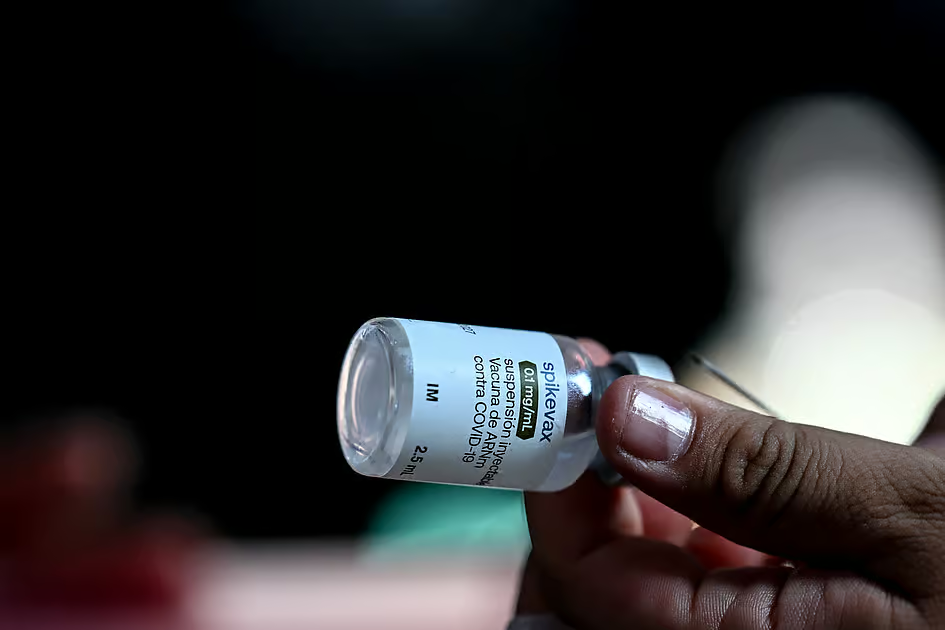
Laboratory results have provided some reassurance, with researchers finding that antibodies produced in people vaccinated with an LP.8.1-adapted Covid-19 vaccine were able to neutralise PJ.2.1.
However, the variant was 1.8 times less sensitive to antibody neutralisation than the LP.8.1 reference strain, according to latest research.
The findings indicate that PJ.2.1 has not shown a substantial ability to evade vaccine-induced antibodies. Nevertheless, laboratory results alone cannot determine how effectively vaccines prevent infections under real-world conditions.
The WHO continues to advise Covid-19 vaccination for those most vulnerable to severe illness, including older people and individuals with certain underlying health conditions.
Source: Khaleej Times
